

The following article brings together the key developments reported in a series of striking stories published in Algor Mountain’s daily newspapers.
It offers an overview of the Katscher case, the growing diplomatic tensions and the questions surrounding the city’s police and medical institutions.


Algor Mountain: A Criminal Case Exposes a Crisis of Confidence
The Dawn Katscher case now extends well beyond a local investigation. Between federal intervention, tensions with the Principality of Carlisne, anonymous messages and a medical controversy, Algor Mountain’s institutions face the same question: whom can the public trust?
The kidnapping and violence reported by Lieutenant Dawn Katscher have placed Algor Mountain at the center of a case involving local police, federal authorities and international diplomacy. Duke Kiranov, a senior representative of the Principality of Carlisne, is among those implicated in published accounts. However, the available information does not establish his guilt or determine everyone’s responsibility.
As the story has developed, several lines of inquiry have emerged: Katscher’s professional history with the Duke, a mysterious classified file, the search for Lee Adria and the circumstances of her medical treatment. Any connection between them remains to be established.
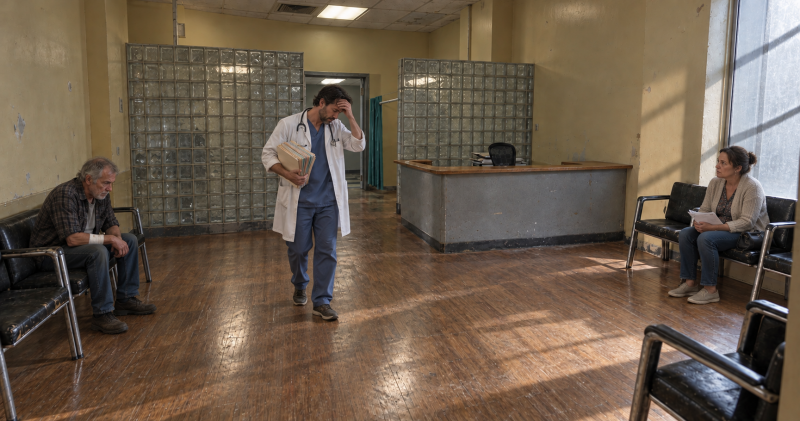
The Hospital Becomes Another Focus of Controversy
Alongside the investigation, Dr. Valerius Crane disputes the way his involvement in Katscher’s treatment has been portrayed. He says he proposed transferring her to his clinic to provide better treatment conditions.
According to Crane, the device known as “the Tube” is not limited to brain treatments: it can also perform various procedures and injections with considerable precision. Those technical claims would require independent evaluation to be assessed beyond the controversy.
Crane also states that Dr. Turli performed the initial examination. He therefore denies responsibility for the first samples collected and their storage. This calls for clarification of the samples’ chain of custody and each practitioner’s responsibilities.
His criticism also concerns the hospital’s condition: a lack of leadership, insufficient staff and aging equipment. If confirmed, those concerns would affect all residents, well beyond the Katscher case.
However, the doctor’s observations about the lieutenant’s behavior cannot determine whether the reported violence occurred. Victims may respond in many different ways; their demeanor cannot substitute for medical findings or evidence.
An Investigation Now Under Federal Control
Detective Zander Shim, who initially led the investigation, says he was required to hand control over to FBI Agent John Golf on instructions from federal leadership. Shim would continue gathering evidence but would now have to submit it to Golf. According to his account, he was also ordered to stop speaking to the press.
The involvement of a foreign dignitary and the risk of an international incident may explain federal intervention. They do not, however, clarify the significance of the classified file associated with Katscher.
Shim maintains that Kiranov is not named in that file, as far as he knows. Nevertheless, he suggests that certain information could place those who possess it in danger. The file’s contents remain unknown, as does any connection to the kidnapping.
Shim’s position also deserves careful examination: he worked with both Katscher and the Duke and reportedly served as the lieutenant’s bodyguard. That proximity may give him valuable information, while making independent verification of his statements necessary.
October 3 at the Center of the Questions
In his October 9 interview with journalist Raegan Shippe, John Golf confirmed that he had been in Algor on October 3 without a public announcement. The agent said he had conducted a preliminary federal assessment but declined to identify its subject.
He did rule out one explanation: his presence that day was not prompted by Lee Adria, who remains wanted.
Golf did not confirm a hospital visit or explain when he learned that Katscher had been hospitalized. He also declined to say whether he had known her previously. Those answers leave questions open; they do not establish personal involvement or misconduct.
Two anonymous messages had directed Shippe’s attention to October 3. The journalist subsequently reported receiving a phone call telling her to stop asking questions. The senders’ identities and any connection between these contacts remain unknown. They could represent intimidation, an attempt to steer her reporting or deliberate manipulation.

A City Waiting for Verifiable Answers
Above all, the Katscher case reveals how fragile public trust becomes when information arrives in fragments. Investigators invoke confidentiality, doctors defend their decisions, the press receives anonymous leads and the accusations take on a diplomatic dimension.
Residents can reasonably expect concrete answers without demanding the disclosure of every sensitive detail: who is leading the investigation, how was the evidence preserved, what supports the allegations and under what conditions are patients being treated?
In Algor Mountain, the priority is now to reconstruct a reliable timeline and establish responsibility. As long as that work remains out of public view, every silence will invite another interpretation—and every interpretation risks being mistaken for a fact.
Add comment
Comments